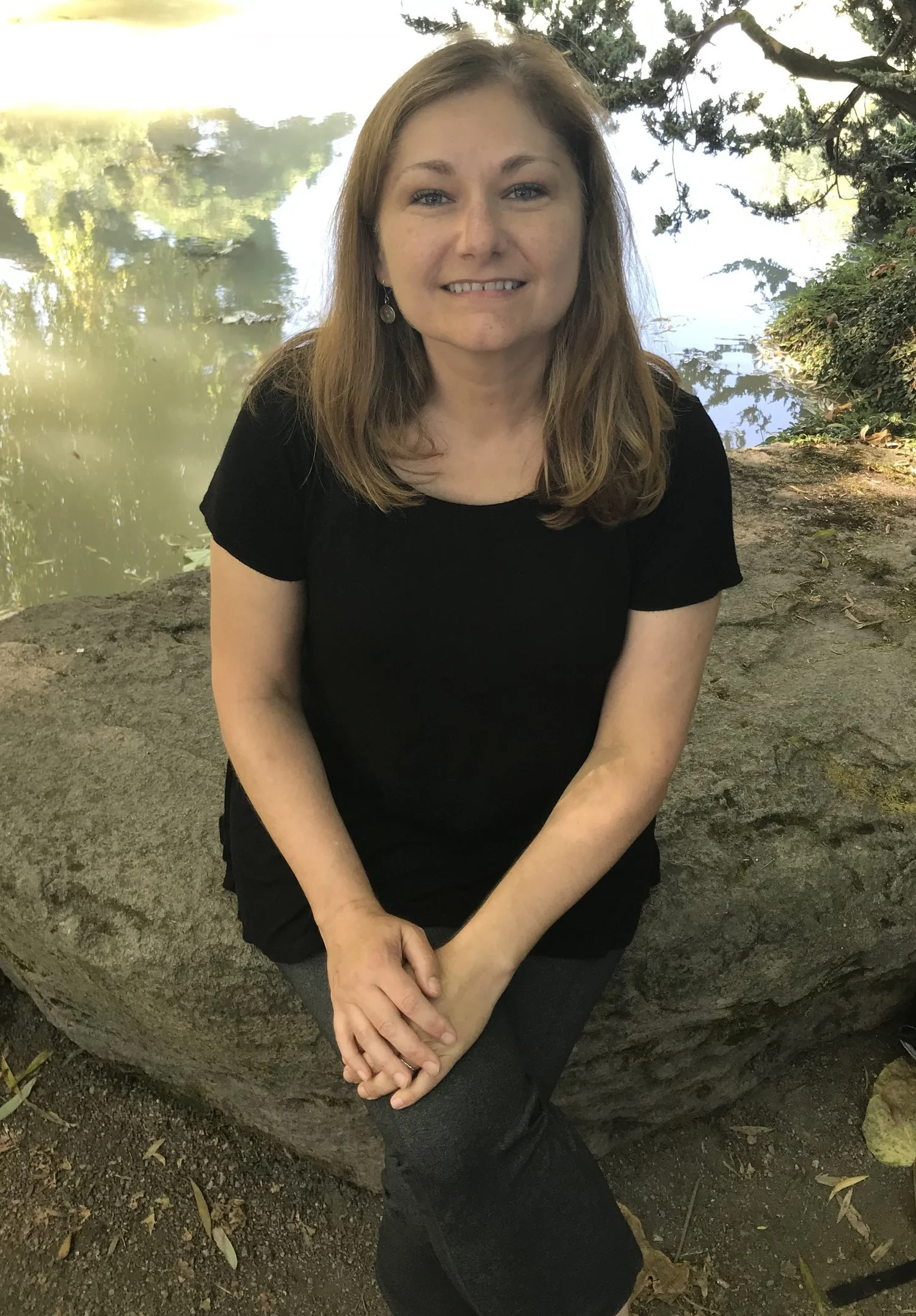
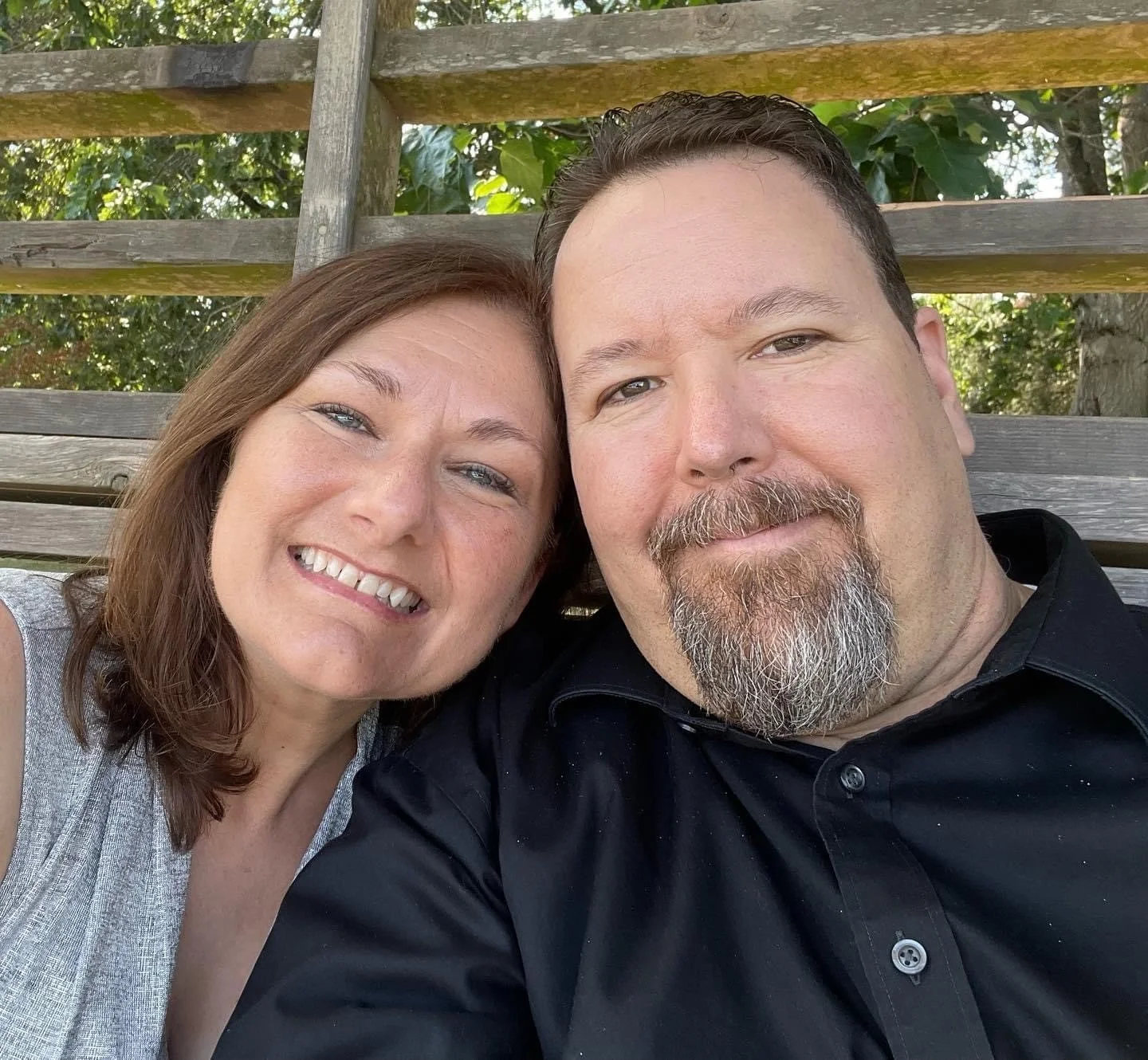
Rebecca and Larry Gifford
“You’re so strong.”
“I don’t know how you do it.”
“I could never handle everything as well as you.”
“You’re an angel/my hero/a saint/the most resilient person I know.”
Sound familiar? If you’re a care partner or caregiver of someone living with a significant health condition, you’ve likely heard or read at least one of these, maybe even recently. I’ve heard them all, and my husband’s only ten years into his young-onset Parkinson’s diagnosis.
Still, every time… I’m flummoxed. I have no idea how to respond.
I appreciate that these expressions are well-intended, loving, and always meant as compliments. So I suppose “thank you” is the polite response. But what am I thanking them for?
I could say, “I’m so grateful you have foisted me onto a pedestal I’m certain I don’t deserve to be on and made me uncomfortable.”
Instead I shrug and say something more palatable like, “You should see me on a bad day.” Or, “Everyone is dealing with something. How is {insert recent life issue here}?” If I think they can handle a little more, I say, “We all do what we have to. Resilience usually isn’t a choice.”
Almost always the person standing before me (or on the other end of the text chain or social media post) dismisses these responses as humility instead of a very sanitized version of the truth. They aren’t ready to see the video I’m running in my head…of me sobbing in the shower that morning…of me impatiently snapping at my husband in the grocery checkout line because he froze and couldn’t keep up…of the emergency room visits where I’m terrified to leave his side because the staff barely knows what Parkinson’s is…of the days when I have to put my head down and breathe for a few minutes just to keep from getting in the car and hiding for a month in a remote cabin with no cell service.
Carers are human, not heroes
Here at the start of the US’s National Family Caregivers Month, I find myself contemplating why these comments, so often said to caregivers and care partners, bother me. Here’s what I’ve come up with: They ignore the very complicated reality of a carers life and humanity.
If we are put onto a pedestal, then we are inherently ”othered” — inaccurately ranked as better-than or too good to stand amongst the mere mortals.
If we are praised for handling it all so well, then it’s incomprehensible that we could ever need help.
If we cease to be human, and somehow become selfless superhumans in their eyes, we cease to have needs and no longer require the support of the tribe. We are now expected to take care of the tribe because we are best equipped for the job.
And if we as carers take on the expectations of those around us — often those who benefit from not having to worry about the person with the condition because we are taking on the bulk of the caring load — then it becomes easy to feel like we are failing if we don’t do our job well in every moment.
Perhaps the most meaningful reason these comments bother me is that they reveal plainly what my fellow carers and I already know: Caregivers and care partners, as a swiftly growing segment of the population, are holding too much. Too much of the responsibility for caring for the people left behind by our healthcare systems. Too much of the responsibility for making sure our loved ones have their basic needs met. We’re giving up too much of our time, health, well-being, income, and dreams for our future.
Not because we want to or because we are saints, but because our situation and the systems we live in make this the only compassionate choice.
Here is the reality:
So many of us… Recent surveys conducted in the US and Canada revealed that 25 percent of these populations are unpaid caregivers to at least one person with an illness, chronic condition or disability. Global estimates run as high as 43 percent of the total population.
Unpaid labor… In Canada, family caregivers contribute an estimated $97.1 billion a year in unpaid labor. In the US this estimate goes up to $1.1 trillion. Carers are spending anywhere from 10 to 60 hours weekly caring for their loved one.
It’s a sandwich…That’s on top of working, parenting, and other responsibilities.
It takes a toll financially… Carers often experience lower work productivity, lost wages, lost employment, or lost savings. Nearly 80 percent of US caregivers are spending at least some of their own money, including for care not covered by insurance. In the UK, 44 percent of working-age carers are living in poverty.
It takes a toll mentally and emotionally… We’re giving up hobbies, activities, travel, social connections and basic self-care like exercise and doctors appointments in large numbers. One in five Canadian caregivers report they are burnt out. In India nearly 50 percent of full-time carers are diagnosed with depression.
We don’t know what we don’t know… Most of the above statistics are from two 2026 surveys conducted in North America. We still don’t have a comprehensive view of family caregiving in most countries.
We need more than praise
Caregivers and care partners shouldn’t have to carry so much. We are resilient because we need to be. But wouldn’t it be better if we didn’t have to be so strong?
These statistics, even my tiny vulnerable stories above, don’t even scratch the surface. I’ve been privileged to know some amazing carers from around the world. We all have countless stories, worries, harsh lessons, and hidden stressors related to our day-to-day care partnership. And many have been doing this longer and have much greater caring responsibilities than I do.
So I say this with urgency on behalf of my beloved fellow carers, on behalf of myself and my future self who will face even more as the years pass, and on behalf of the vast majority of you, dear readers, who will need or be a caregiver at some point:
We need support — financial support in addition to tax benefits, and to be paid for our unpaid labor. We need accessible and affordable respite care, home care, and full-time care. We are so grateful when thoughtful care partner programs are offered, but even more than this we need help advocating for the support, time, freedom, and funds to participate in them at all.
We need governments, healthcare systems, and insurance companies to stop counting on us to fill in the gaps they either can’t or won’t fill themselves.
We need acknowledgment that we are more than carers. The healthcare industry, advocacy organizations, and systems at large must understand that making healthy choices, living full lives, and planning for the future are not privileges that are contingent on the well-being of our loved ones. They are basic human needs.
Most importantly, we need these institutions to do more than acknowledge the issues or say the right words. We need them to do something about it.
It takes more than love to thrive
Most of us love our lives and our loved ones dearly. It’s the love and the good days that drive us to keep going. We want to do more than simply keep going.
We want to thrive. We want our loved ones to thrive. And we need to make sure this is possible for everyone.
To do this, carers need much more than praise.
We can do better.
Here are some things you can do today to help us all do better:
Reach out to your regional or national Parkinson’s or other disease-related organization and ask them what they’re doing to advocate for carers. A few caregiver-focused organizations are already on the job and could use your help.
Here’s a link to get you started: The State of Care in Your Country
For folks in the US who are part of the Parkinson’s community, submit a public comment advocating for greater support for caregivers and care partners to the Advisory Council on Parkinson’s Research, Care, and Services. It’s a simple process. Here’s a link for the contact email and details:
If you are a Parkinson’s caregiver or care partner and you’re interested in helping PD Avengers advocate for you and your fellow carers, please send an email to larry@pdavengers.com.
Please complete the PD Avengers Community Pulse Onboarding survey and then take the November survey later this month. We’ll be asking about care partner advocacy. Help us discern where to focus our efforts to support this community.
Many national and regional Parkinson’s organizations offer valuable programs and resources related to care partnership. Please take advantage of these as much as you are able. You can find links to many of these on the PD Avengers Care Partner page.
ABOUT THE AUTHOR
Rebecca Gifford is a Parkinson’s and care partner advocate, writer, workshop facilitator, and podcast host and producer living in Vancouver, British Columbia. She facilitates online writing workshops for people facing chronic and neurological conditions and care partners. She co-hosted and co-produced When Life Gives You Parkinson’s with her husband for six years, and continues to support the production of webinars and podcasts for multiple organizations, including the Michael J Fox Foundation for Parkinson’s Research and The Walrus Lab. She is care partner to her husband Larry, president and co-founder of PD Avengers, and mother to their teenage son.